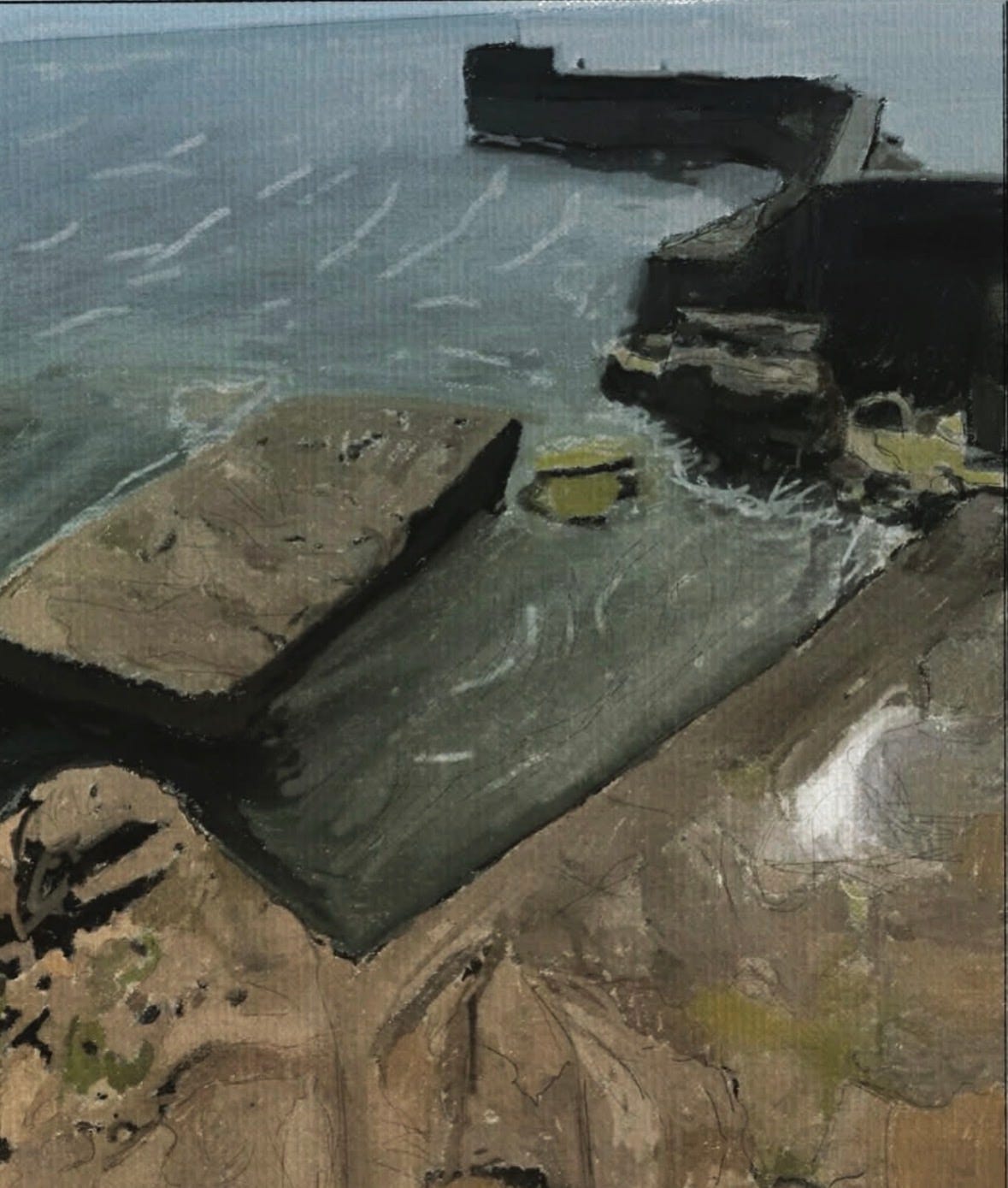
The Blocks

I never think of the Blocks as something that was built. They feel more like something that arrived, edged in, piece by piece, and decided to stay.
From Virgin Square, one row back from the harbour edge, I’ve always lived with the sea within sight and within earshot. My family has been here longer than any others, longer than memory likes to admit. Long enough that the walls know our names. Long enough that the wind coming off the water feels personal. When the North Sea is restless, it reaches us anyway, through Duck Wynd, along the stones, rattling windows that have heard worse.
The Zig-Zag Pier, what visitors call the Blocks, sit out there doing the work no one notices until it stops being done. Robert Stevenson designed the harbour walls in a time when the sea was both bread and threat, and the breakwater was laid not in a straight line of confidence but in angles, as if even stone knew better than to meet the North Sea head-on. It turns its shoulder, then turns again, redirecting force rather than challenging it. A quiet kind of wisdom.
St Monans folk grew up with harbour stories the way other children grow up with lullabies. Tales of herring runs so thick the boats sat low in the water, silver pressed against wood, the air sharp with salt and fish oil. Our people fished those shoals. The women waited where I still walk now, shawls pulled tight, counting boats, reading the colour of the sea like scripture. A good catch always carried a shadow. The sea gives, but it remembers what it’s owed.
There were stories too, always stories. Lights moving beyond the harbour mouth, not lanterns, not stars. Some said it was the Herring Queen, her crown flashing as she turned the shoals. Others said it was the sea itself, testing us, seeing what we would risk, what we would lose. Every family in the village has a name the water keeps.
From my window, the Blocks can look almost gentle on a calm day. Photographers come for the angles, the leading lines, the way light fractures along wet concrete. They don’t always see the warning in it. There are no railings. No promises. When the tide is high and the wind hard, the sea climbs the structure like it means to reclaim it, waves breaking and folding back in on themselves, baffled but not beaten.
We know better than to treat it casually. We know how slippery it gets, how quickly the mood of the water changes. The Blocks aren’t a place to linger, they’re a conversation still in progress. Stone speaking to water. Water answering back.
At night, when the harbour is quiet and the boats lie close and still, I can hear the sea moving past the angles of the breakwater, a low breathing sound that carries right into Virgin Square. It feels like listening, like counting and I think of all the generations who slept within reach of that sound, trusting those zig-zag stones to keep the worst of it at bay.
So far, they have and we remain, one row back from the edge, watching the sea remember us.